
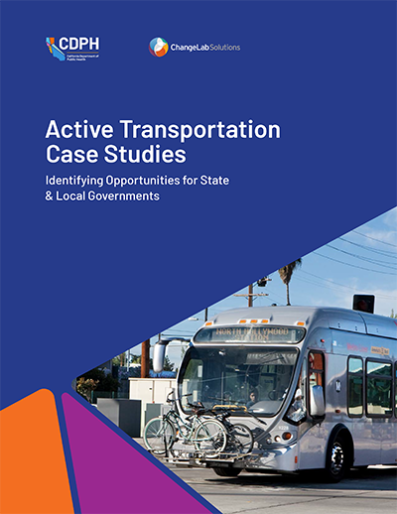
Active Transportation Case Studies
Identifying Opportunities for State & Local Governments
Active transportation refers to human-powered ways of getting around, such as walking, wheeling, biking, or scootering, including travel to and from public transit.
Using examples from Fresno County and Imperial County, California, these case studies explore how jurisdictions fund infrastructure through voter-approved taxes and levies, grant programs, and planning processes such as general plans and Vision Zero action plans. They emphasize strategies where health departments are often most involved, including grant applications, implementation, and community engagement.
You may also be interested in our related Active Transportation resource.
About The Case Studies Series
State and local governments have a wide range of policy tools available to improve community health, address chronic disease, and advance equity. Understanding how these tools work in practice, and how they have been implemented in different jurisdictions, can help policymakers, public health practitioners, and community leaders make informed decisions and tailor strategies to their own contexts.
ChangeLab Solutions developed this series of policy case studies — that examine active transportation, healthy food procurement, and beverage procurement — in collaboration with the California Department of Public Health (CDPH) Nutrition and Physical Activity Branch (NPAB) to highlight policy strategies that have been shown to improve the health of residents.
Related Resources

Black Graphics
Eric Fischer - Flickr