
Active Transportation Strategies
How local health departments can support active transportation strategies
Active transportation refers to human-powered ways of getting around, such as walking or rolling by foot, wheelchair, bicycle, scooter, or accessing public transit.
Decades of research and data show that active transportation is associated with increased physical activity and many health benefits, particularly when communities make it safe and accessible. Active transportation is also more cost effective than owning and driving a car and can support more equitable communities by serving people of a wide range of ages and abilities.
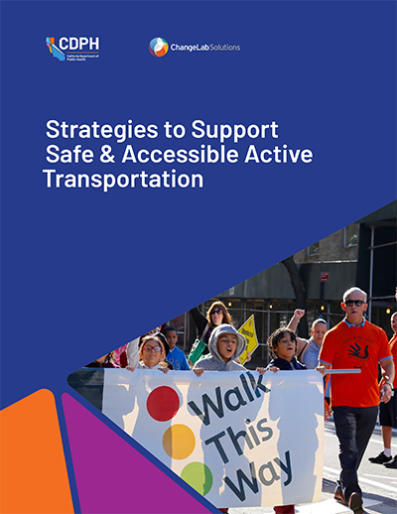
Strategies to Support Safe and Active Transportation offers guidance on how local health departments (LHDs) can support active transportation plans, policies, and projects in their communities. The resource focuses on three key approaches used in the transportation field — Complete Streets, Vision Zero, and Safe Routes to School — and helps deepen understanding of how these approaches connect and complement one another.
- Complete Streets is an approach to planning, designing, and building streets that enables safe access for all users of all ages and abilities.
- Vision Zero is a strategy to eliminate all traffic fatalities and severe injuries by using a Safe System Approach that anticipates human error, considers human vulnerability, and prioritizes system‑level design and operational changes.
- Safe Routes to School is a national movement that aims to make walking and biking to school safer, easier, and more accessible through comprehensive programs focused on engagement, equity, education, encouragement, engineering, and evaluation.
Together, these approaches prioritize vulnerable road users and demonstrate that no single policy can achieve a safe and accessible active transportation system alone. A coordinated, multi‑pronged approach that leverages planning processes, funding, and cross‑sector partnerships can more effectively support safe, healthy, and equitable active transportation for people of all ages and abilities.
To learn more about active transportation with examples from Fresno County and Imperial County, California, read our case studies.
Related Resources

Lydia Daniller
Eric Fischer - Flickr