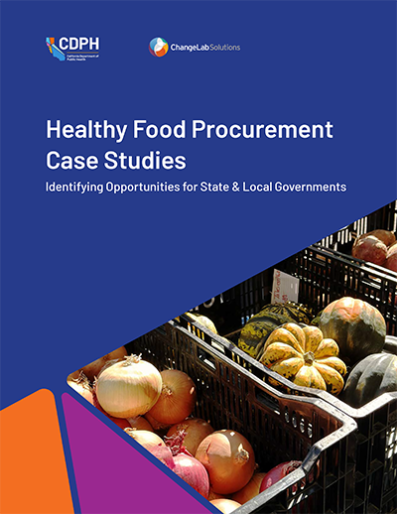
Food Procurement Case Studies
Identifying Opportunities for State and Local Governments
These case studies focus on food procurement policies using examples from San Francisco, San Diego, and Cook County, Illinois. Food procurement is the process by which large institutions source and manage food for settings such as schools, hospitals, correctional facilities, and senior programs.
The case studies introduce healthy, values-based procurement and the Good Food Purchasing Program (GFPP) framework, which centers equity, transparency, local economies, environmental sustainability, workforce conditions, animal welfare, and community health. They also examine how jurisdictions use ordinances, resolutions, and board policies to codify these values and guide purchasing decisions.
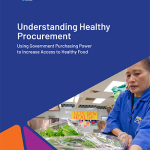
For more information about food procurement, read our guides: Understanding Healthy Procurement and Homegrown.
About The Case Studies Series
State and local governments have a wide range of policy tools available to improve community health, address chronic disease, and advance equity. Understanding how these tools work in practice, and how they have been implemented in different jurisdictions, can help policymakers, public health practitioners, and community leaders make informed decisions and tailor strategies to their own contexts.
ChangeLab Solutions developed this series of policy case studies — that examine active transportation, healthy food procurement, and beverage procurement — in collaboration with the California Department of Public Health (CDPH) Nutrition and Physical Activity Branch (NPAB) to highlight policy strategies that have been shown to improve the health of residents.
Related Resources
Black Graphics