
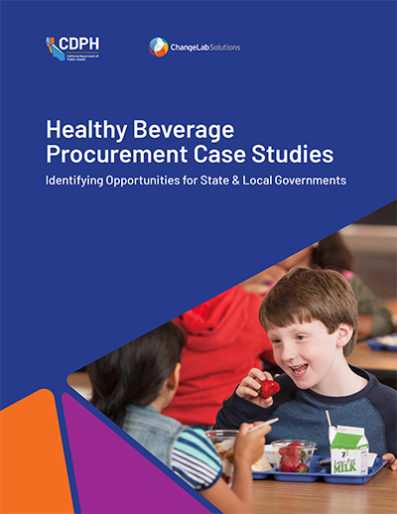
Healthy Beverage Procurement Case Studies
Identifying Opportunities for State and Local Governments
These case studies explore healthy beverage procurement policies and practices across a diverse set of jurisdictions, including Iowa, the University of California San Francisco, New York City, Boston, Massachusetts, and the Delaware Division of Parks and Recreation.
Healthy beverage procurement refers to the planned, end-to-end process of sourcing and purchasing beverages that prioritize nutrition, sustainability, and community goals within large institutions. The case studies trace the evolution of healthy beverage procurement from early efforts to reduce sugar-sweetened beverage consumption to more comprehensive strategies across government facilities and institutions. They highlight how policies define healthy versus unhealthy beverages, phase in standards over time, and rely on vendor contracts and compliance mechanisms.
You may also be interested in our related resource, Understanding Healthy Procurement.
About The Case Studies Series
State and local governments have a wide range of policy tools available to improve community health, address chronic disease, and advance equity. Understanding how these tools work in practice, and how they have been implemented in different jurisdictions, can help policymakers, public health practitioners, and community leaders make informed decisions and tailor strategies to their own contexts.
ChangeLab Solutions developed this series of policy case studies — that examine active transportation, healthy food procurement, and beverage procurement — in collaboration with the California Department of Public Health (CDPH) Nutrition and Physical Activity Branch (NPAB) to highlight policy strategies that have been shown to improve the health of residents.
Related Resources
Black Graphics
Black Graphics